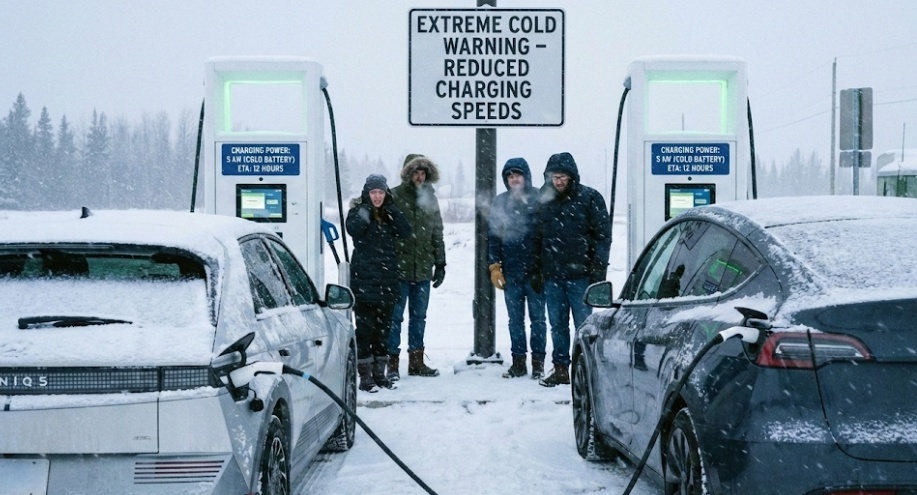
If you own an Electric Vehicle like me you probably know that slow charging is a problem when it is cold outside. In the winter my Electric Vehicle charges slowly and there are several reasons for this. I want to tell you about the five reasons why Electric Vehicle charging is slower in cold weather and how you can easily fix these problems at home.
Lets get started.
- Precondition or warm up the Electric Vehicle battery
When the Electric Vehicle battery is cold it takes a time to charge. This is why charging my Electric Vehicle feels slow in the winter. The solution is easy. Thirty to forty-five minutes before I go to a charging station I turn on the battery preconditioning feature using my cars app or the system in my car.
This works because it gets the Electric Vehicle battery to the temperature for charging. Soon as I plug it in the Electric Vehicle battery starts charging much faster.
- Charge my Electric Vehicle after driving
When I get back from a drive I charge my Electric Vehicle right away. I do not wait until the morning.
After I drive my Electric Vehicle, the Electric Vehicle battery is already warm. If I wait overnight the Electric Vehicle battery gets cold again which means it charges slowly. Charging my Electric Vehicle while the Electric Vehicle battery is still warm means it does not need energy to heat up and charging starts faster right away.
- Set the charger as my navigation destination
When I am going out and plan to charge my Electric Vehicle I set the charging station as the destination in my navigation or GPS.
My Electric Vehicle, like a Tesla knows that I am going to a charger. My Electric Vehicle automatically starts preheating the Electric Vehicle battery while I drive. When I arrive I get the charging speed right away and my Electric Vehicle battery charges much faster.
- Park my Electric Vehicle in a garage or in sunlight
The outside temperature has an impact, on how fast my Electric Vehicle charges. I try to park my Electric Vehicle in a garage whenever I can. Even if the garage is not heated it still helps.
If I do not have a garage I park my Electric Vehicle in sunlight during the day. Even a little bit of warmth helps keep the Electric Vehicle battery warm reduces energy loss and makes charging. In the evening I park my Electric Vehicle inside. During the day sunlight helps my Electric Vehicle.
- Keep my Electric Vehicle plugged in at home
When my Electric Vehicle is parked at home I keep it plugged in even if the Electric Vehicle battery is already full. Some people think this will hurt the Electric Vehicle battery. It does not.
When my Electric Vehicle is plugged in it uses power from the grid to keep the Electric Vehicle battery warm of using the Electric Vehicle battery itself. If the Electric Vehicle battery loses an energy it gets filled up automatically. This keeps my Electric Vehicle battery healthy and ready in cold weather.
By following these five tips you can charge your Electric Vehicle faster in weather without hurting the Electric Vehicle battery.
EV Charging in Snow
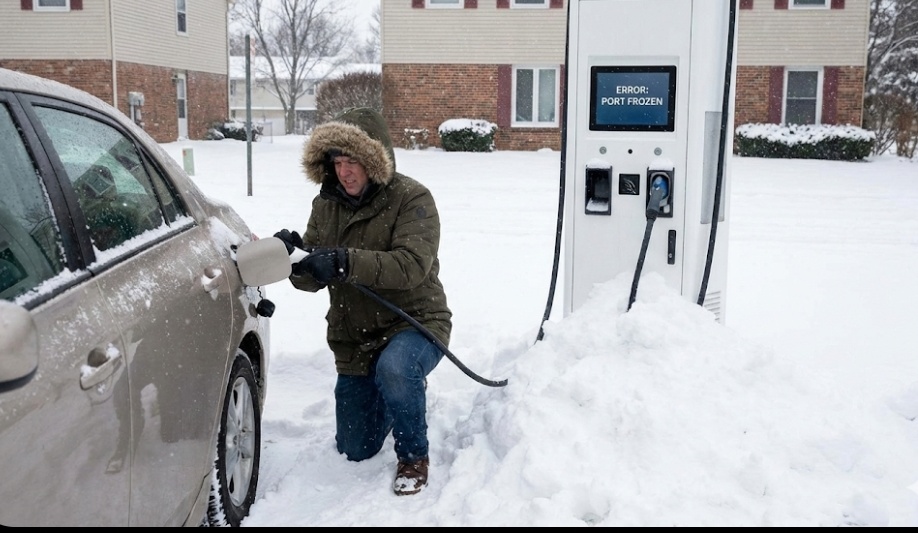
When people think about vehicles they often wonder if it is safe to charge them in the snow. I think it is safe to charge a vehicle in the snow. Charging a vehicle in the snow is completely safe. The parts of a vehicle that you use to charge it are waterproof so that is not a problem. The problem is when ice starts to build up because ice can cause problems, with the parts of an electric vehicle. If you are going to charge your vehicle in the snow here are some important things to keep in mind about charging an electric vehicle in snowy conditions.
Snow charging tips
1. Always cover the charging port
Snow can get into the charging port. Turn into ice. This can stop the plug from fitting or make it hard to take out later.
- A simple fix is to use a cover for the EV charging port. It is cheap and easy to find. Put it over the port like a raincoat to keep out snow.
If you do not have a cover put a cloth over the plug and handle. This keeps snow out of the port. Protects the inside parts.
Preventing Issues
- Clear snow before plugging in
Before you plug in always check that there is no snow or ice on the charging port pins. Forcing the plug in can turn snow into ice. Cause charging problems.
Also keep the charging cable off the ground. If it touches the ground it can. Stick. Hang it on a hook. Keep it up to avoid problems.
What to Do if the Plug Gets Stuck
Sometimes the connector can freeze and get stuck in the car. If that happens first push the connector inward to break the ice seal then unlock and pull it out.
You can also use heat or the manual emergency release cable. Most electric vehicles include a release, often found in the trunk area especially, in SUVs and trucks.
Level 1 charging in cold weather
Charging from a home outlet with a Level 1 charger can be tough, in cold weather.
Level 1 charging gives little power. This often isn’t enough to warm the battery and charge it properly.
If Level 1 charging is your choice here are some tips.
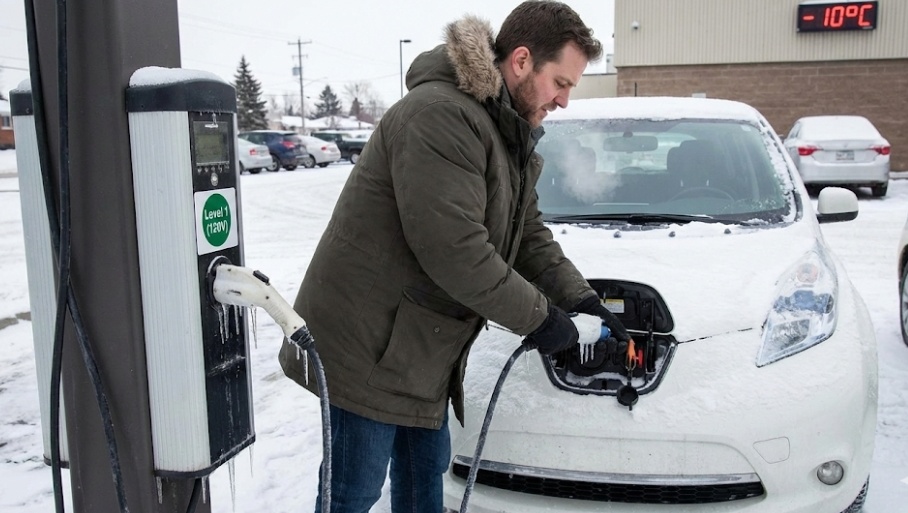
Here are some things to think about when you charge your car.
Tip 1: You should park your car in the sunlight when it is charging. The sunlight helps warm the battery. That helps prevent energy loss because Level 1 power is limited.
Tip 2: You should plug your car in soon as you get back from a drive when the battery is still warm. This makes it easier for the charger to do its job.
Tip 3: You should leave your car plugged in overnight even if the battery is full. This helps because the car will not use its energy to stay warm and that prevents battery drain.
These things can help you.. I want to be honest with you in really cold or snowy weather you should not use Level 1 charging all the time. It is better to use it when you have to. It can help prevent the battery from dying. It is not good for daily driving or parking outside.
If you can you should get a Level 2 charger because it is much better. If you cannot afford that then you should follow these tips to get the results, from a Level 1 charger.
Is it true that Tesla electric cars are really unusable in cold weather?
I live in northern Utah and we have cold winters with occasional extreme cold. I keep my car plugged in to a regular outlet at night in the winter and schedule it to precondition for when I am planning to leave in the morning. My car is parked outside but is always warm and defrosted in the morning when I am ready to go.
The worst I need to do is brush off some snow. The battery is also warm when I leave since the car uses some energy to maintain the battery temperature and therefore the car has full power (which is way more than you would ever need). If I go skiing, on the last lift ride of the day I tell the car to warm up using the app. When I get to car 15 minutes later, the car is warm and defrosted. The battery isn’t fully warmed up, but still has tons of power. Going down the hill from the resort, my car charges the whole way down. My Honda Pilot transmission would always smell a little when I got to the ski resort and the brakes and transmission would always smell on the way down since the road is so steep, but my battery now just does a moderate charge cycle on the way home.
I essentially don’t use any of the battery to get home. It takes about 11% of the battery to drive the 20 miles through the Canyon and up the hill to the resort. The biggest downside in the cold is a reduction in range of 20–30% due to the heat required to keep the battery and cabin warm and other efficiency losses due to the cold. Since electric vehicles are more efficient, they generate minimal excess waste heat so heating is an additional load on the battery. That energy is always wasted by gas powered vehicles, but I also don’t have to idle my engine to warm up my car.
It just activates the systems that are needed when they are needed. I have a 2023 Model Y which has a heat pump. Many older Teslas had a much less efficient heating system, but with the heat pump the efficiency of heating and cooling is much higher. I’ve camped in my car in cold temperatures and had the car stay at 65º all night and it only uses a few % of the battery capacity. In extreme cold, it can use up to 10% of the battery at night which is not a problem at all. At an RV campsite with hookups, I can charge all night opening up a lot more of the wide open spaces to an EV.
Just like with my gas car, I am careful to keep my battery at a higher state of charge in the winter. The Tesla charging network is good, but needs to improve and spread out more and we need more slow charging distributed everywhere. My car sits around most of the time so if it could charge when it was sitting around at the ski resort, at a restaurant, or at the store, I would only need superchargers when I was going on very long trips.