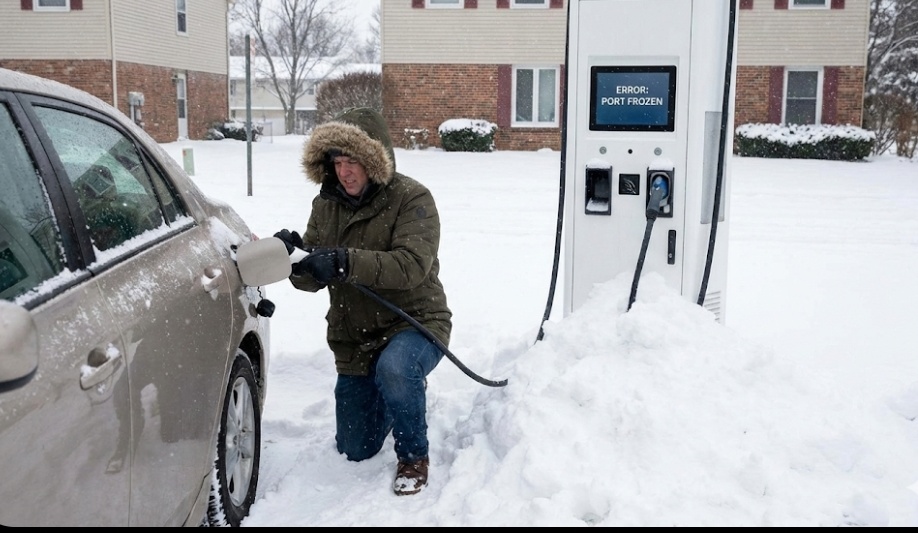
If you own an Electric Vehicle like I do you probably notice that it charges slowly when it is cold outside. My Electric Vehicle charges slower, in the winter. There are a reasons why this happens to my Electric Vehicle. I want to tell you about the five reasons why Electric Vehicle charging is slower when it is cold. I will also tell you how to fix these problems with my Electric Vehicle at home.
Let us start.
How to Speed Up EV Charging in Winter: 5 Instant Fixes
Get the battery ready to charge
When the battery is cold it takes a lot longer to charge. This is why it seems to charge slowly in the winter.. There is a simple solution. If you are going to charge your car turn on the battery up feature about thirty to forty five minutes before you get to the charging station. You can do this using the app for your car or the system in your car.
This helps because it gets the battery to the temperature, for charging. Then when you plug it in the battery starts to charge a lot. The battery preconditioning feature is really useful. It helps the battery charge faster. So remember to use the battery preconditioning feature when you need to charge your car.
Charge your Electric Vehicle after driving
When you get back from a drive or a trip charge your Electric Vehicle right away. Do not wait until the morning.
After driving your Electric Vehicle the battery is already warm. If you wait overnight the battery cools down again which leads to charging. Charging your Electric Vehicle while the battery is still means it does not need extra energy to heat itself and charging starts faster right away.
Set the charger as your navigation destination
Whenever you are heading out and plan to charge your Electric Vehicle set the charging station as the destination in your navigation or GPS.
Modern Electric Vehicles, including models like Tesla recognize that you are going to a charger. Your Electric Vehicle automatically starts preheating the battery during the drive. When you arrive you get the charging speed immediately and your Electric Vehicle battery charges much faster.
Park your Electric Vehicle in a garage or in sunlight
temperature has a big impact on charging speed. Try to park your Electric Vehicle inside a garage whenever possible. Even if the garage is not heated it still helps.
If a garage is not available park your Electric Vehicle in sunlight during the day. Even a small amount of warmth helps maintain your Electric Vehicle battery temperature reduces energy loss and improves charging speed. In the evening park your Electric Vehicle inside. During the day sunlight works in your favor.
Keep your Electric Vehicle plugged in at home
Whenever your Electric Vehicle is parked at home keep it plugged in even if the Electric Vehicle battery’s already full. Many people worry this will harm your Electric Vehicle battery health. It does not.
When plugged in your Electric Vehicle uses grid power to keep the Electric Vehicle battery warm of draining the Electric Vehicle battery itself. If there is any drain it gets topped up automatically. This keeps your Electric Vehicle battery healthy and ready in cold weather.
By following these tips you can charge your Electric Vehicle faster in conditions without any negative impact, on your Electric Vehicle battery health.
it is safe to charge an EV in snow
Now, many people ask whether it is safe to charge an EV in snow. In my opinion, yes, charging in snow is completely safe. EV charging components are waterproof. The real issue comes from ice buildup, which can cause physical problems. Here are some important tips if you are charging your EV in snowy conditions.
Snow charging tips
1. Always cover the charging port
Snow can enter the charging port and freeze into ice, which can prevent the plug from locking properly or make it difficult to remove later.
A simple solution is to use a magnetic EV charging port cover, which is inexpensive and easy to find. Place it over the port like a raincoat to block snow.
If you do not have a cover, drape a cloth over the plug and handle. This prevents snow from directly entering the port and keeps internal components safe.
2. Clear snow before plugging in
Before plugging in, always check that there is no snow or ice on the charging port pins. Forcing the plug in can turn snow into ice and trigger charging errors.
Also, keep the charging cable off the ground. If it touches the ground, it can freeze and stick. Hang it on a hook or keep it elevated to avoid issues.
3. If the plug gets stuck
Sometimes the connector can freeze and get stuck in the car. If that happens, first push the connector gently inward to break the ice seal, then unlock and pull it out.
You can also use gentle heat or the manual emergency release cable. Most EVs include a manual release, often accessible from the trunk area, especially in SUVs and trucks.
Level 1 charging in cold weather
Charging from a home outlet using a Level 1 charger can be tough in cold weather. Level 1 charging gives low power, which is often not enough to warm the battery and charge it well.. Here are a few tips if Level 1 is your only choice.
- Tip 1: Park the car in sunlight while charging. Since Level 1 power is limited letting sunlight warm the battery helps prevent energy loss.
- Tip 2: Plug in after driving when the battery is still warm. This reduces the effort the charger needs to make.
- Tip 3: Leave the car plugged in overnight even if the battery is full. This stops the battery from draining because the car uses its energy to stay warm.
These tips can help,. To be honest in snowy or very cold conditions Level 1 charging should be seen as backup support, not a full charging solution. Level 1 charging can stop the battery from dying. It is not ideal for daily driving or outdoor parking.
If possible a Level 2 charger is a better option for charging. If that is not affordable then follow the tips I shared to get the results, from a Level 1 charger and a Level 1 charger.
If electric cars are not good in extreme cold, then why do people keep buying Teslas in Canada?
It’s because your premise is wrong. Teslas are actually quite good in the cold.
Like all vehicles, they lose efficiency as they get cold. But it’s predictable. I live in rural northern Alberta, Canada. Last year, it got below -40C for over a week. Though my range went down (by about 50%), it did so predictably. And most importantly, the car continued to be reliable. Even if the car is cold and the batteries aren’t as efficient, the thing is, *it still works*. There are no worries about not being able to start the car, like there is with a gasoline vehicle.
And in those temperatures, even gasoline vehicles are left plugged in overnight if people want to have a chance of starting them. In Canada, we have block heaters – electric heaters that warm up a gasoline engine so it can be started in extremely cold weather. An EV doesn’t need this, though of course you can plug the car into a regular outlet (just like a block heater) to keep the battery from slowly losing its charge in the cold.
If you have to park your vehicle outside overnight, it can take a bit of time for the battery to warm up enough to be able to charge relatively quickly at a supercharger. So keeping it in a garage overnight in cold weather is ideal, particularly if you can charge it there too. That’s what most Canadians who own Teslas likely do… just as garages are popular for gasoline vehicles too.
When we first got our Tesla in 2019, I was hesitant about how it would behave in Canada’s climate, but we decided to take the plunge anyway. 5 years later, when our family needed another vehicle, we bought another Tesla, and we do not own a gasoline vehicle any more. And if we can make it work in rural northern Canada, I think it would work for most people.