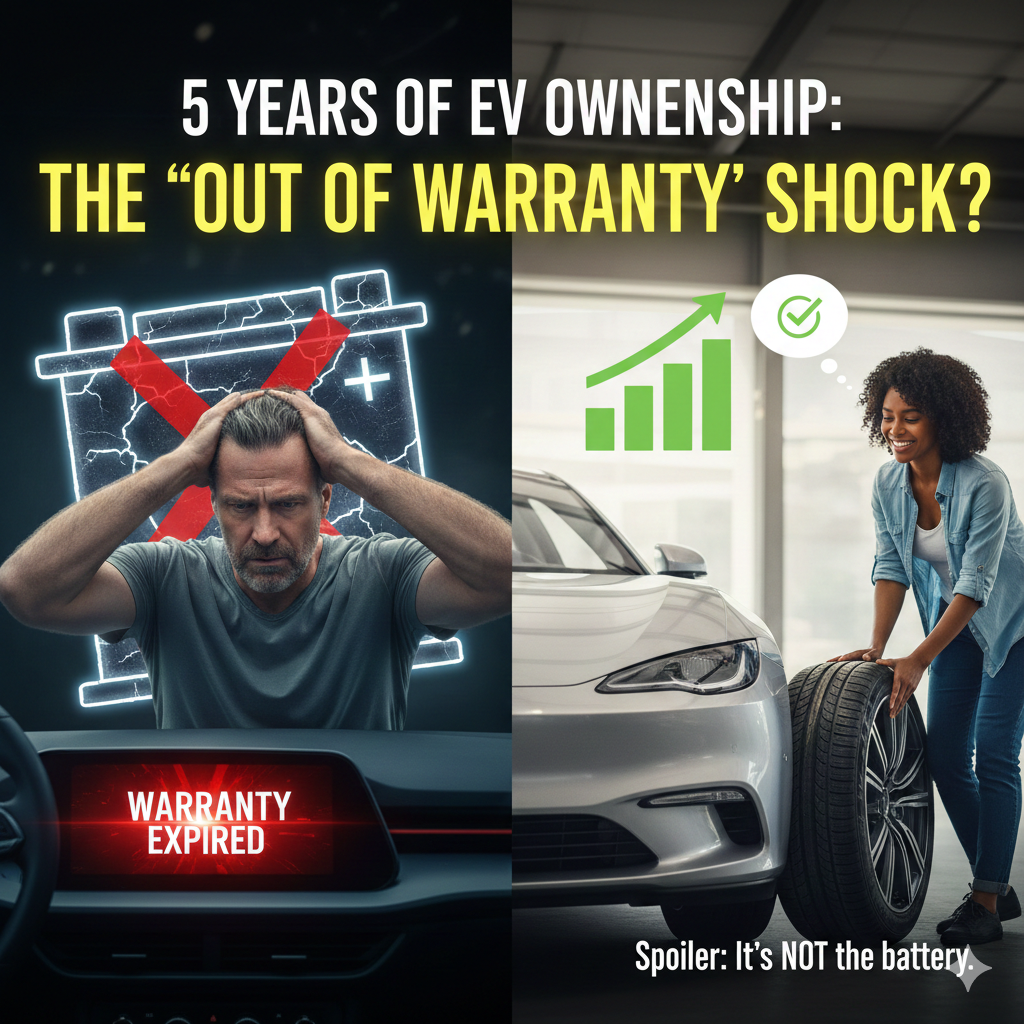
I still remember how exciting it was to drive my Electric Vehicle off the lot. The power was instant. The motor was really quiet. It felt like I was driving in the future.. Now it has been five years and the warranty on my Electric Vehicle is about to expire. This is making me feel anxious about the money I might have to spend. I am worried about the cost of replacing the battery, in my Electric Vehicle. We have all heard about people spending twenty thousand dollars to replace the batteries in their Electric Vehicles.. I talked to people who have owned Electric Vehicles for a long time and I looked at some real data from 2026. Now I know that the surprise is not what I thought it would be. Let us look at what happens when your Electric Vehicle reaches fifty thousand miles.
1. The Safety Net: What Stays and What Goes?
In the United States we are lucky. When your basic three year or thirty six thousand mile warranty ends you are not totally without protection.
The Federal Shield: By law your battery and drivetrain are covered for eight years or one hundred thousand miles.
The Gap: The real shock usually comes from the things. The infotainment screen that suddenly freezes or a suspension rattle that your dealer used to fix for free but now costs one hundred fifty dollars just for the diagnostic fee. The little things like the screen and the suspension rattle can be a big problem for your Federal Shield, the battery and drivetrain because the warranty, for the Federal Shield, the battery and drivetrain does not cover these things.
2. The Real World “Shocks” (They aren’t the battery!)
If you think your cars battery will fail after 5 years calm down. It’s not common. Instead get ready for these electric vehicle maintenance issues that surprised many of us:
- The Tire Problem: I found out the way that electric cars wear out tires fast. The heavy battery and quick acceleration mean you’ll probably need to buy a set of tires by year 5. A good set of tires that don’t wear out fast will cost over $1,000.
- The 12 Volt Battery Issue: It’s funny that your car has a battery but can still stop working because a small $200 battery dies. Many owners forget about this battery until they’re stuck in their driveway.
- The Suspension Wear: Potholes in cities, like New York or Chicago don’t care if you’re driving a car. The extra weight of a vehicle puts more stress on the suspension parts. By year 5 you might start hearing noises.
3. EV vs. Gas: The 5-Year Showdown
Is an out-of-warranty EV a money pit? Let’s be honest: a 5-year-old BMW or Audi is a much scarier place to be financially.
| Maintenance Reality | Electric Vehicle (EV) | Gas Car (ICE) |
| The “Surprise” Factor | High (Tech/Software) | Very High (Mechanical) |
| Predictable Costs | Very Low | High (Oil, Belts, Plugs) |
| Annual Average | ~$450 | ~$950+ |
4. How I’m Prepping My Own EV (And You Should Too)
If you are worried do not just wait for something to break. Here is my personal Post-Warranty Survival Guide for vehicles.
Request a State of Health Report: Before that 8 year battery warranty ends you should ask your dealer for a State of Health report. The State of Health report is your leverage when it comes to your electric vehicle.
Software is like maintenance for your vehicle: you need to keep your electric vehicle updated. Sometimes a repair for your vehicle is just a software patch that you can download in your garage for your electric vehicle.
Find an EV-Friendly Independent Shop: do not get held hostage by the prices at the dealership for your vehicle. You should look for shops, with ASE EV Certification. They usually charge 20 to 30 percent less for your vehicle.
The Verdict: Don’t Panic
The idea of an “Out of Warranty Shock” is much not true. It is something that people talk about to get attention. Yes it can be expensive to fix something when the warranty’s over.. If you think about it you do not have to pay for gas or expensive oil changes for a long time like five years. So electric vehicles are still a deal.
What is the thing that worries you the most, about having a vehicle for a long time? Let me know what you think about vehicles in the comments.
Which parts in your EV need regular maintenance?
The wiper blades (needs new ones every 6 months, just like every other car we’ve ever owned).
The driver – needs food, restroom breaks, adequate sleep, etc., no matter what car we’re driving.
And that’s it.
It’s blissfully maintenance free
Does an electric vehicle need lubrication and maintenance? Which parts need oiling?
EVs still need some lubrication and maintenance, just not in the same way as gas cars. A lot of people think “oh it’s electric so zero maintenance,” but that’s not totally true. You don’t have engine oil changes every 10k miles (which is nice), but there are still moving parts that need love.
For example the reduction gear (basically the EV’s version of a transmission, but way simpler) uses special gear oil. It doesn’t get changed often, some manufacturers say “lifetime fill” but others recommend checking it like every 100k km or so. Then you’ve got the bearings in the electric motor itself, those are sealed and lubricated but technically they rely on grease/oil too. You never really touch them unless something goes wrong though.
“Beyond the Motor: Why 90% of EV Maintenance is Exactly Like a Gas Car”
Yes. The only difference between an EV and an ancient technology car is the engine and gearbox, the rest of the car is very similar.
The hinges and locking mechanisms still require lubrication and adjustment. The brakes need checking and lubrication every couple of years due to lack of use, and the brake fluid needs changing every 2 years just as it does on an old fashioned car.
The steering mechanism needs inspection, lubrication and adjustment occasionally, as does the suspension. Coolant will need checking annually and changing every 4–6 years.
The item needing the most frequent, and the most expensive, consumable is the windscreen washer fluid.